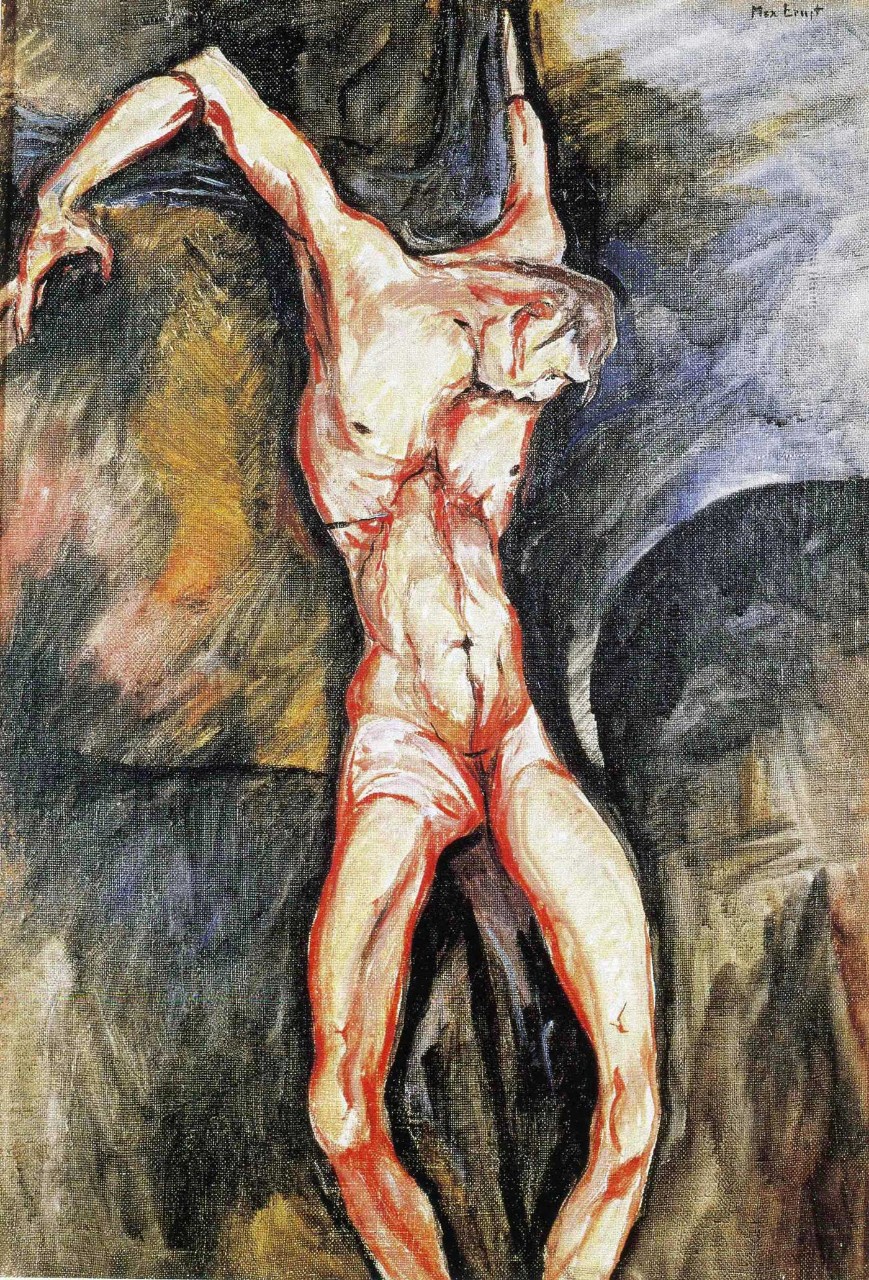
Crocifisso by Max Ernst
This small painting is a piece of exceptional importance, as it is a very rare example of the expressionist formation of one of the most significant figures of the twentieth century. Ernst produced the work during the years in which he knew August Macke, whom he met in 1912, when he was already part of the group Der Blaue Reiter along with Klee, Kandinsky, Marc and Gabriele Münter. It was precisely in this period that Ernst decided to devote himself entirely to painting. The Crucifix demonstrates the artist’s interest in the anatomy of Christ, represented in a position that shows extreme muscular tension. The use of colour, especially the red with which he emphasises the outline of the body, also contributes to drawing the gaze towards the suffering of Christ in His martyrdom.
taşa çarpmaya yöneldi söz
duyulmadı
varlık sözden değil
ama nasılsa
güzel sözlere itiyor
çoktandır insanı insan deneneni
iyi de
ne ki insan
tohumu başka mı taştan sudan
aynı değil mi kül ve duman
hararet ve buhar ile
aynı tohum şimdi s ö z l e r i döllüyor
varlıktan varlığa bir
hata sağanağıdır bu
ses kendi mantığını kuruyor
nedense
s ö z oluyor
sonrasında
her yüzey bir savaş alanı
bir tozlu kerhane öğle vaktinde
inlemek haykırmak susuvermek
kahkaha atmak sahte gülümsemek
için
renkli bir bok çukuru
yani söylendi
taşa çarpıp sustu söz
yürümeye devam edildi ve hala
taş su kül duman hararet ve buhar
sözleri döllüyor
ölene kadar yutuyoruz
uykunun yükselen
hiçliğin patlayacak sesine kadar
sindirmeye çalışıyoruz
varlık sandığımızı
varlıktan varlığa ağıyoruz
bir hata sağanağında